
Some time around 1880, a man named Marin Tomašić, known to his neighbors as Caparin, was walking through a canyon called Stiniva on the island of Korčula. The Adriatic sun was doing what it always does, bouncing off white limestone and making the air shimmer. And there, growing wild among the rocks, was a vine.
Most people would have walked past. Marin stopped. He was a viticulturist by instinct, and something about this particular vine caught his attention. The grapes were different. The clusters were compact. The berries had a distinctive pointed shape. Intrigued, he took cuttings and planted them in a spot called Punta-Sutvara. He shared more cuttings with farmers in the villages of Smokvica and Čara.
He could not have known it at the time, but Marin had just changed the course of Croatian wine history. That wild vine was Pošip. Today, it is the most planted white grape in Dalmatia and the first white wine in Croatia to earn its own protected designation of origin. Not bad for a plant growing abandoned in a canyon.
The Science Behind the Legend
The story of Caparin and his discovery is beautiful. But modern science, as it tends to do, wanted to dig deeper. In 2002, DNA analysis finally revealed Pošip’s parentage. The mother? Zlatarica Blatska, also known locally as Bratkovina. The father? Blatska, another native variety from Korčula. Both parents were indigenous to the island, both deeply local, both part of a lineage that had been growing on that rocky soil for centuries. Pošip, in other words, was no accident. It was a child of Korčula, born from two ancient vines that had been quietly thriving on the island long before anyone thought to study them.
The Vine That Said No to Phylloxera
Here is a fact that winemakers still marvel at. In the late 19th century, a tiny aphid called phylloxera swept across Europe and destroyed the vast majority of the continent’s vineyards. Millions of hectares were wiped out. Entire wine regions collapsed.
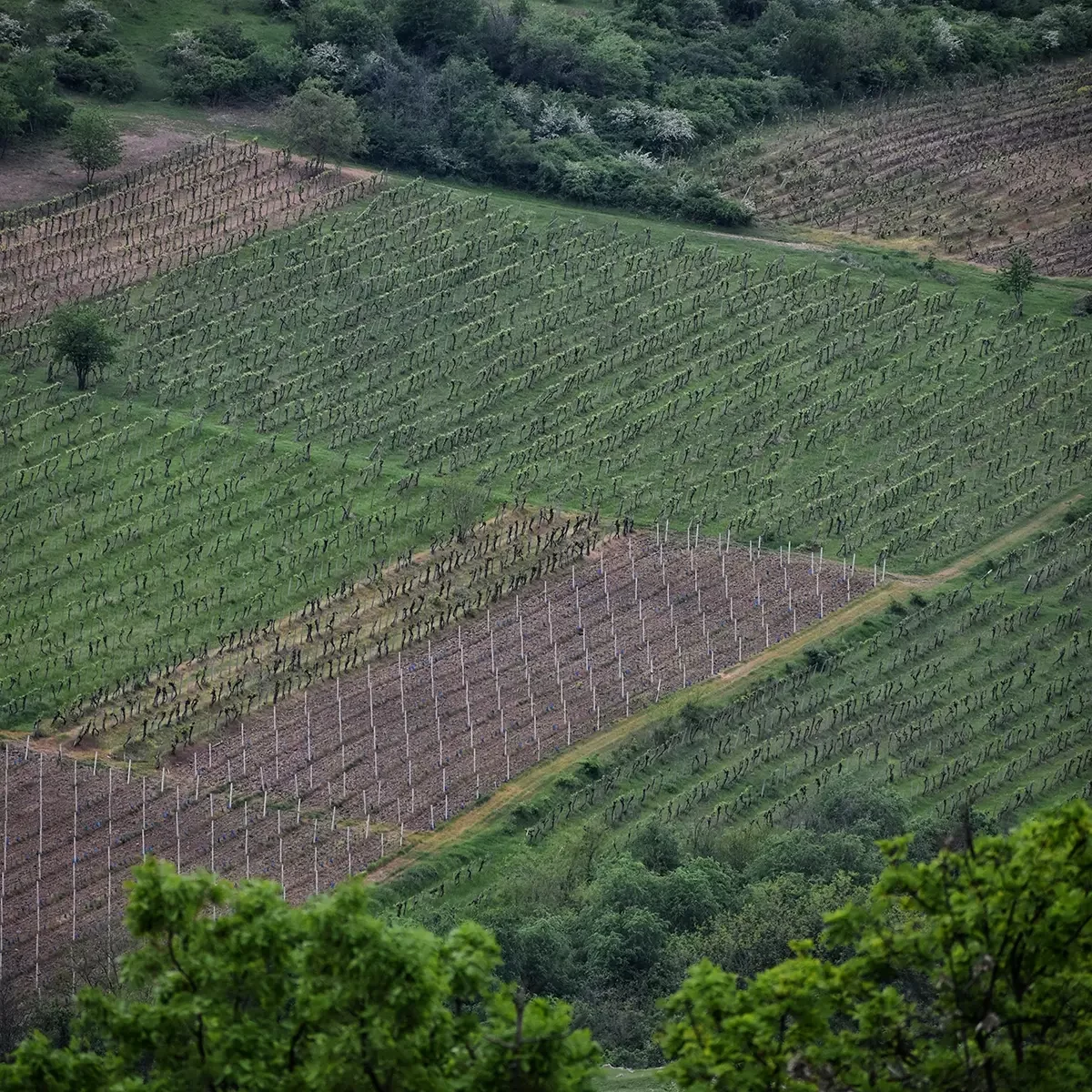
Pošip, in certain parts of Smokvica, shrugged it off. The secret was sand. Phylloxera cannot survive in sandy soils, and in a few precious plots around Smokvica, the ground was sandy enough to protect the vines. What this means is astonishing: there are Pošip vines growing in Korčula today that still grow on their own roots. They were never grafted onto American rootstock, as nearly every other vine in Europe was forced to do.
To drink a Pošip from one of these sandy plots is to taste something that has survived, unchanged, for over a century. In the wine world, that is close to a miracle.
What the Sea Does to a Grape
Korčula is a striking island. From a distance, it looks dark, almost black, because of the dense pine forests that cover its hills. Locals sometimes call it “the black island.” But the wines that made it famous are white.
The paradox is only skin-deep. Pošip grows in a landscape defined by three forces. First, the white karst rock that dominates the soil, reflecting sunlight and forcing the roots to dig deep for water and nutrients. Second, the Mediterranean sun, generous and relentless, which the growers manage by carefully positioning the vine canopy to protect the grapes from overexposure. And third, the Maestral, a cooling afternoon wind that sweeps across the Adriatic and preserves the acidity that makes Pošip so refreshing.
The result is a white wine that tastes like the place it comes from. There is fruit, yes—apricot, peach, sometimes fig—but there is also something harder to describe. A saline edge. A stony, mineral backbone. A finish that lingers like sea spray on warm skin. This is not a white wine that could come from anywhere else.
The Many Faces of Pošip
One of the things that makes Pošip so rewarding to explore is its versatility. It is not a one-note grape. Depending on where it grows and how the winemaker chooses to work with it, Pošip can wear many different faces.
The classic style, fermented and aged in stainless steel, is vibrant and fresh. Think citrus zest, green apple, and that unmistakable saline minerality. It is the Pošip you want on a hot afternoon, with a plate of oysters or grilled white fish.
Then there is the barrel-aged style. When Pošip spends time in oak, it gains weight and complexity. Notes of vanilla, toasted almond, and fresh hazelnut emerge. The texture becomes creamier, the finish longer. These wines can age gracefully for five to ten years, developing honeyed, nutty characters that recall fine white Burgundy.
Some producers age Pošip on the lees—sur lie—stirring the dead yeast cells through the wine to build texture and depth. The result is velvety and rich, with a creamy mouthfeel that wraps around the mineral core.
There is even a sweet passito version, made from grapes dried under the autumn sun for three or four weeks. The juice concentrates into something dense and honeyed, with notes of dried apricot, caramel, and candied orange peel. Served with blue cheese or a fruit tart, it is unforgettable. A handful of producers have even experimented with traditional-method sparkling Pošip, with results that are intriguing and increasingly impressive.
Food Pairings Worthy of the Adriatic
Pošip is, at its heart, a wine for the table. Its combination of body and freshness makes it one of the most food-friendly whites in the Mediterranean.
Fresh Pošip, with its citrus drive and salty finish, is built for seafood. Oysters, particularly the famous Ston oysters from the Pelješac peninsula, are a classic and unbeatable pairing. Grilled white fish, octopus salad, black risotto with cuttlefish, and shellfish pasta all find their perfect companion in a chilled glass.
Barrel-aged or sur-lie Pošip can handle richer dishes. Think roasted chicken with herbs, grilled veal, or creamy mushroom risotto. The weight of the wine stands up to the food without overwhelming it.
As for the sweet passito, the rules change. This is a wine for blue cheese, for almond cake, for apricot tarts, or simply for a quiet moment at the end of a long meal.
Where to Find the Best Pošip
The spiritual home of Pošip is, and always will be, Korčula. The villages of Čara and Smokvica are the historic heart of production, and the wines from these two crus are the benchmark against which all others are measured.
Čara produces Pošip of exceptional elegance and minerality. Smokvica, with its sandy soils and ancient ungrafted vines, yields wines of depth and power. Tasting side by side, you can feel the difference the soil makes. It is a masterclass in terroir.
Beyond Korčula, Pošip has spread along the Dalmatian coast. The Pelješac peninsula, Komarna, Hvar, and Brač all produce excellent examples, each with its own signature. The grape has proven remarkably adaptable, but it never loses its essential character: that salty, sun-drenched, unmistakably Dalmatian soul.
Some producers worth seeking out include Krajančić, whose “Sur Lie” is a benchmark of the style, and Toreta, whose mineral-driven wines from Smokvica are pure expressions of place. PZ Pošip Čara makes the classic reference-point wines. Black Island Winery, under the Merga Victa label, crafts premium wines from old vines. On Pelješac, the legendary Mike Grgich, of Paris Tasting fame, produces a polished Pošip that is widely available internationally. And Rizman in Komarna does both a fresh stainless steel version and a more complex barrel-aged “Nonno” from organic vineyards.
Five Things Worth Remembering
Before you open your next bottle, here are a few facts that might deepen the pleasure. The name Pošip may come from the pointed shape of the grape berries. Another local legend says the original vine was found growing over a pomegranate tree—šip in Croatian.
The original Pošip was probably not a single-variety wine. Old-timers in Korčula often made a blend that included Rukatac, known elsewhere as Maraština, and Bratkovina alongside the Pošip. The modern trend toward monovarietal wines is relatively recent.
Pošip is the most planted white grape in all of Dalmatia. From a single vine in a canyon to nearly three hundred hectares across the coast, its rise has been remarkable. It was the first white wine in Croatia to earn protected designation of origin status, all the way back in 1967. Red wines like Dingač had their protections earlier, but for white wine, Pošip led the way.
And finally, those ungrafted sandy-soil vines in Smokvica are not just a curiosity. They are living history. Every glass poured from those grapes carries a direct, unbroken line back to vines that were growing before the First World War.
The Invitation
Pošip is a wine that rewards curiosity. It does not shout. It does not need to. What it offers instead is something rarer: a taste of the Adriatic as it actually is. Rocky, sunlit, salt-tinged, and alive. The next time you find yourself in Split with a glass in hand and the afternoon stretching out ahead of you, ask for a Pošip. Taste the canyon where it all began. Taste the sea.
Better yet, come and taste it with us at Split & Sip. We will have a bottle open, a story ready, and a seat at the table with your name on it. Book your tasting at splitandsip.com.
Živjeli.